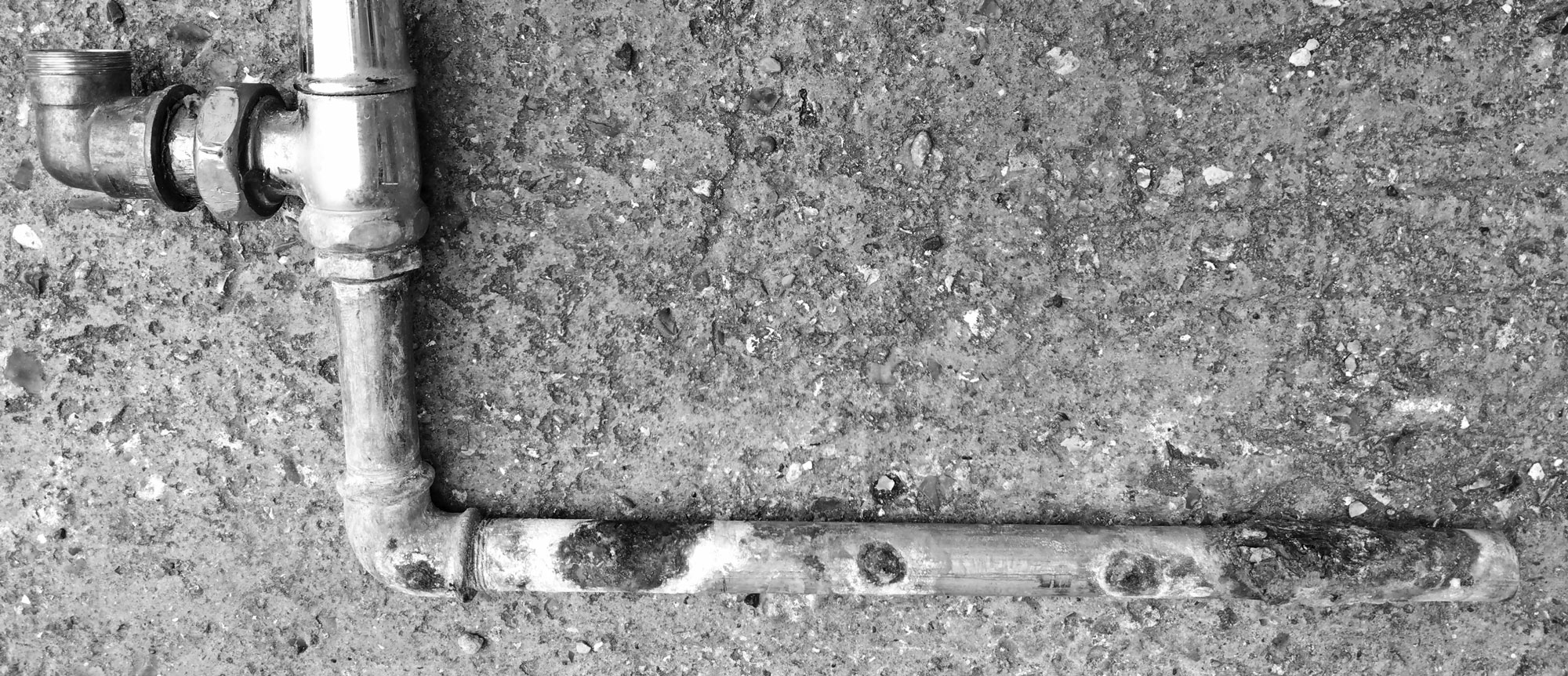
So here’s a course of events that’s as convoluted as… well, the plumbing in Knebworth House. A film company wants an antique silk-topped dressing table removed from a bedroom that’s to play the part of a hotel room. The dressing table is stored temporarily in a passageway. Whilst it is there, a water pipe bursts in the floor directly above it. The water seeps under the glass top of the dressing table and irredeemably stains the antique silk.
The floorboards are lifted in the floor above and it is discovered that the cast iron water pipe – well over a hundred years old – has corroded with age and is failing along its length. Pulling up further carpets and floorboards, the pipe goes on and on, and all along its length there are signs that the iron is nearing the end of its life. So it is not simply a case of fixing the leak, it is a case of replacing the whole pipe.
But of course this is not the only cast iron pipe to have been plumbed into Knebworth House at that time. After the original lead pipes of the 1880s, we suspect there was a modernising to cast iron plumbing in Edwardian times – probably when Lord Strathcona, Canadian High Commissioner to the United Kingdom, was renting the house before the First World War. Lord Strathcona had laid the Canadian Pacific Railway, so laying iron pipes through Knebworth House was not going to be too much of a challenge for him. If you’re pleased I’ve had a wash through the years, you’ll join me in being glad that he did. But it is rather more of a challenge for us to consider replacing every cast iron pipe in Knebworth House. Ouch. Perhaps we could repurpose them as a sprinkler system.
Henry Lytton Cobbold
@HenryCobboldKH