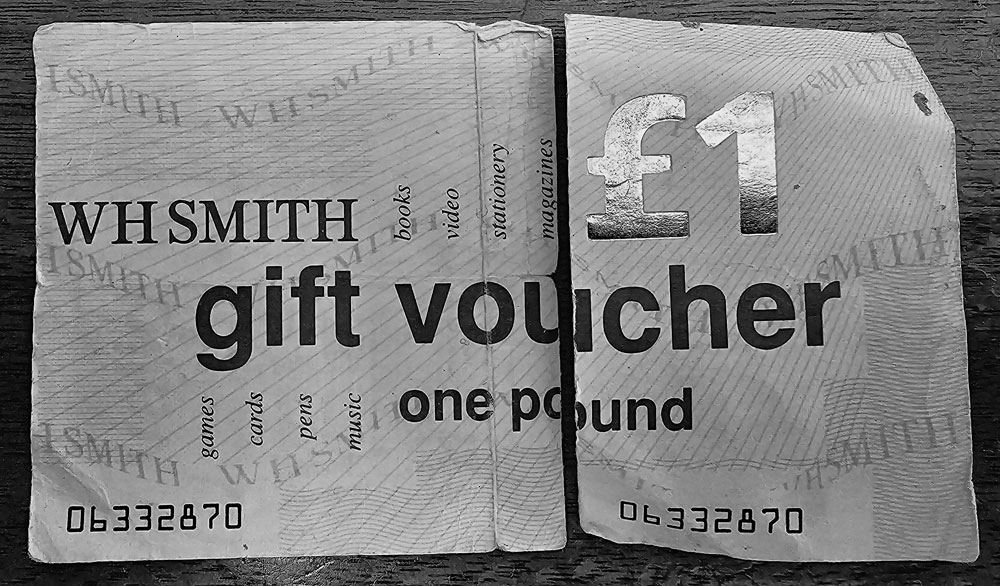
This £1 WH Smith book token has been shuffling around at the back of my desk drawer since my grandmother gifted it to me when I was a child, back in the days when you could buy a book for £1. Sadly, I think I have missed my chance to trade it in, as WH Smith, in this century, has downsized to the travel bookshop it began as when it opened a news-stand at Euston station in 1848, and even a cheap paperback for the train is not going to be mine for £1.
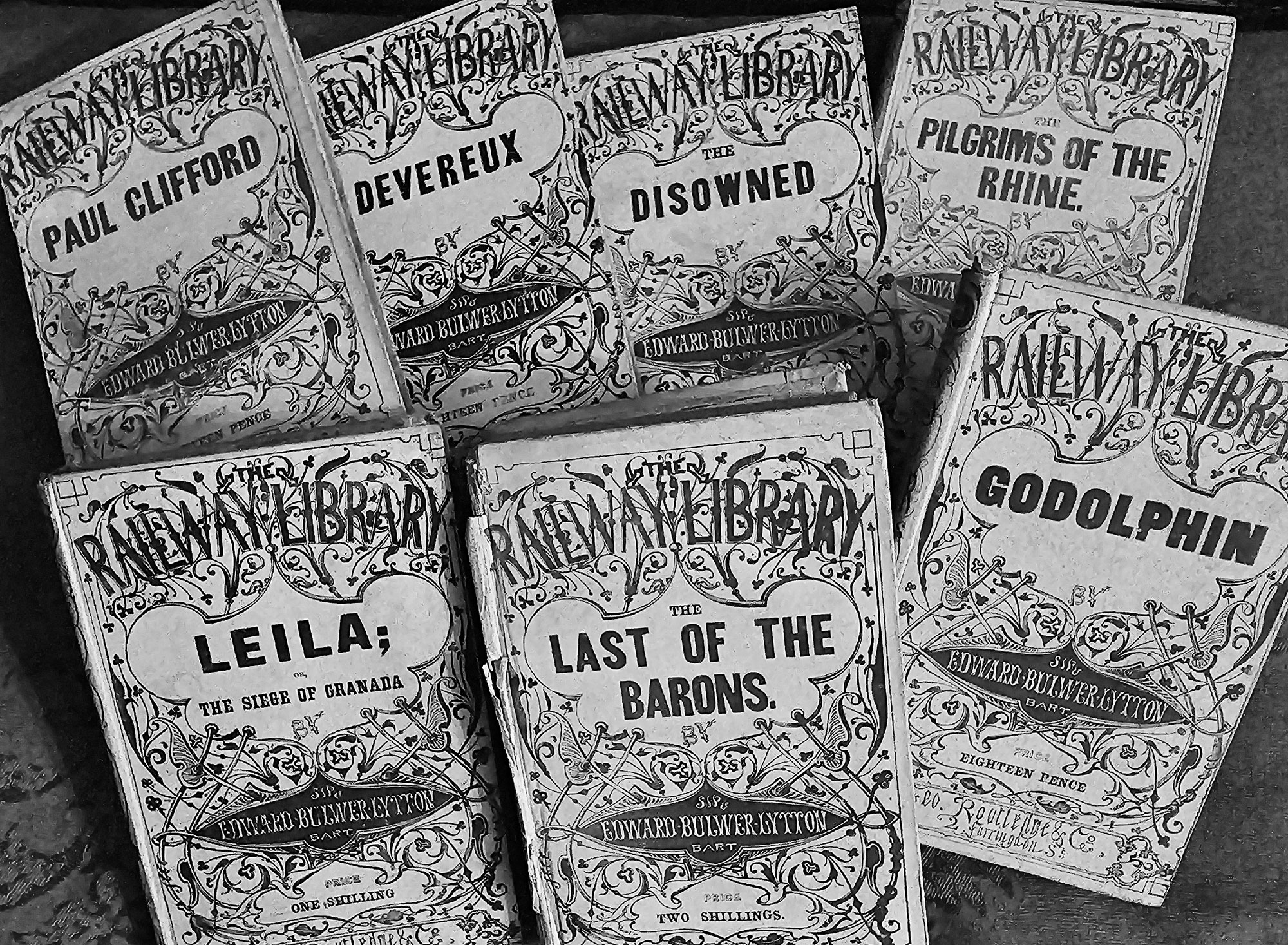
1848 was the year that publisher George Routledge & Co. inaugurated its ‘Railway Library’ – heralding the birth of the ‘paperback’ – and with this, WH Smith was responsible for raising the standards of the sort of thing you could buy at a Railway station. Routledge – and WH Smith – believed the public would buy a travel copy of a previously published popular work. Routledge took a gamble, and offered to pay previously best-selling author, Edward Bulwer Lytton (now being outsold by a precocious young journalist called Charles Dickens) £100 a year for the ‘paperback’ rights to 20 of his novels for ten years. It was a good call. Just Bulwer Lytton’s novel ‘Pelham’ sold 46,000 copies in the first five years of the 18 pence Railway Edition, which equates to £3,450 pounds of 1850s money. The 2 shilling Railway Edition of 1859 sold another 35,750. Bulwer Lytton played an important role in building up WH Smith’s business.
I suspect you have not read ‘Pelham’. Should you? Well, that very question will be answered on Thursday 17th September, when I give a talk on Bulwer Lytton’s novels in the author’s home, Knebworth House, in support of Knebworth Twinning Association. Tickets are available via the KTA website – WH Smith book tokens and shillings not accepted, but all pounds and pennies going to a good cause.
Henry Lytton Cobbold
@HenryCobboldKH
@HenryCobbold