

Explore 500 years of fascinating history at this treasure house of stories. Want to know more?
Visit Knebworth House on one of our open days.
Sir Robert Lytton of Derbyshire supported Henry VII at the Battle of Bosworth in 1485. He became a close confidant of the King, carrying out the roles of Under Treasurer of the Exchequer and Keeper of the Great Wardrobe, serving as a member of the Privy Council, and was made a Knight of the Bath. In 1490 he purchased the Manor of Knebworth, possibly to be nearer to the King’s court in London, and began the building of a new, four-sided red brick courtyard house.
Sir Rowland Lytton was a lawyer and politician. He was a Member of Parliament for Truro, Cornwall from 1586 to 1587 and Hertfordshire from 1597 to 1598 and 1604 to 1611. He became a Justice of the Peace for Hertfordshire in 1587 and was Sheriff of Hertfordshire for 1594–1595. He was captain of the band of gentlemen pensioners to Queen Elizabeth I, who were her personal bodyguards. In 1603, he was knighted by King James I.
Elizabeth Bulwer Lytton inherited Knebworth House on the death of her father Richard Warburton Lytton in 1810. She was a widow with three sons. As the house was in a state of disrepair after several years of neglect, she decided to have three wings demolished, leaving just the one wing that remains today. She oversaw the running of the estate until her death.
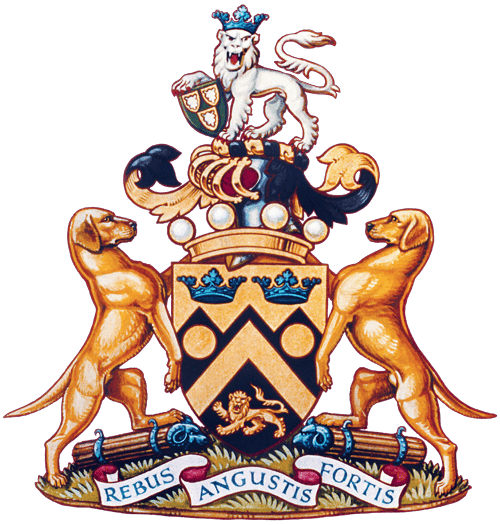
Edward was a novelist, poet, playwright & politician. He married Rosina Doyle Wheeler in 1827, and they had 2 children Emily and Robert. The couple separated after 7 years and had a tempestuous relationship for the rest of their lives. After inheriting Knebworth House in 1843 Edward began transforming it into the fashionable Tudor Gothic style with gargoyles and griffins and interior decoration by John Gregory Crace. Edward decorated the house with his mother’s heraldry in her honour.
Robert Bulwer Lytton married Edith Villiers in 1864. Robert was a Diplomat and poet; publishing poetry as Owen Meredith. He was Viceroy of India 1876 – 1880 and proclaimed Queen Victoria as Empress of India. From 1887 he was British Ambassador in Paris until his death in 1891. After his death, his wife Edith became Lady-in-Waiting to Queen Victoria and Queen Alexandra. They had 7 children, including Lady Constance Lytton, who became a suffragette and was imprisoned 4 times.
Victor married Pamela Plowden in 1902. He worked in Government, was Governor of Bengal 1922 - 1927, headed the Lytton Commission for the League of Nations 1931-32, and became a Knight of the Garter in 1933. When Victor and Pamela took up residence in Knebworth House in 1908, they began modernising and decorating parts of the house and garden with the help of Victor’s brother-in-law, the architect Edwin Lutyens. They had 2 sons and 2 daughters, but their 2 sons predeceased their parents.
Lady Hermione Lytton married Cameron ‘Kim’ Cobbold in 1930. Kim joined the Bank of England in 1933 and was Governor from 1949 - 1961. After her father Victor’s death in 1947, Hermione inherited Knebworth House. In 1960 Kim was given the title Baron Cobbold of Knebworth by Queen Elizabeth II. From 1963 - 1971 he was Lord Chamberlain of Queen Elizabeth’s Household. Following his retirement, Kim and Hermione moved to a house by the lake and their eldest son, David, took over the running of the house.
David Lytton Cobbold married Christine Stucley in 1961. They decided to turn the estate into a tourist attraction. In 1971 the Park opened with a new entrance road from the A1(M) and visitor numbers jumped from 8,000 to 120,000. They also established the Park as an open air rock concert venue. David also had a career in banking, sat in the House of Lords and was Deputy Lieutenant of Hertfordshire. In 1999 they retired to a house in the village and their eldest son Henry moved into the house with his family.
Henry Lytton Cobbold married Martha Boone in 1987. Henry is a screenwriter and author and is closely involved in running the house and estate. Martha is Managing Director of the leisure management business & estate and administrator of the Knebworth House Education and Preservation Trust, which seeks to preserve and maintain the house for the benefit of the public. In 2020 Martha became the 1st female President of Historic Houses and in 2021 she became a Deputy Lieutenant of Hertfordshire.
The Hon. Edward Lytton Cobbold and his wife Dr. Helena Meyer-Johann were married in 2023 and are the 20th generation of the Lytton family at Knebworth. Following a career in the live music industry, Edward is a Director of Lytton Enterprises Limited and works alongside his parents in running the estate. Helena is a junior doctor working in London.
Knebworth was probably first a Saxon settlement. The Domesday spelling in 1085 is 'Chenepeworde', meaning 'village on the hill'.
After the Battle of Bosworth Sir Robert Lytton purchased Knebworth from his cousin's husband for £800 in 1490.
Around 1500, Sir Robert Lytton began to build onto the 15th century gatehouse a new four-sided house enclosing a central courtyard.
The House remained virtually unaltered until the 19th Century. In 1813, Elizabeth Bulwer Lytton, finding the building 'old fashioned and too large', demolished three sides including the medieval gatehouse.
Sir Edward Bulwer Lytton went further adding domes, turrets, gargoyles and stained glass transforming the House into the gothic fantasy we know today.
In 1881 Robert, 1st Earl of Lytton commissioned architect John Lee to add a third storey and watch tower to part of the building.
When the 2nd Earl, Victor, and his family moved into the house, a new century had brought a change in taste and the interior was considered dark and old-fashioned. Victor consulted his brother-in-law Edwin Lutyens, who advised on alterations to the House and Gardens.
By the 1940s Knebworth House was in a poor state of repair. Two World Wars, the Depression and taxes had taken their toll on the Estate. Chattels and properties were sold to pay for emergency repairs.
In 1984 The Knebworth House Education and Preservation Trust was set up. The Trust raised an endowment, supported by local authorities, and has successfully completed major restoration of the basic structure and external decoration.
In 2012 Knebworth House was designated by English Heritage as a priority building at risk. As repair costs rise and resources continue to diminish, saving Knebworth House is a battle against time.
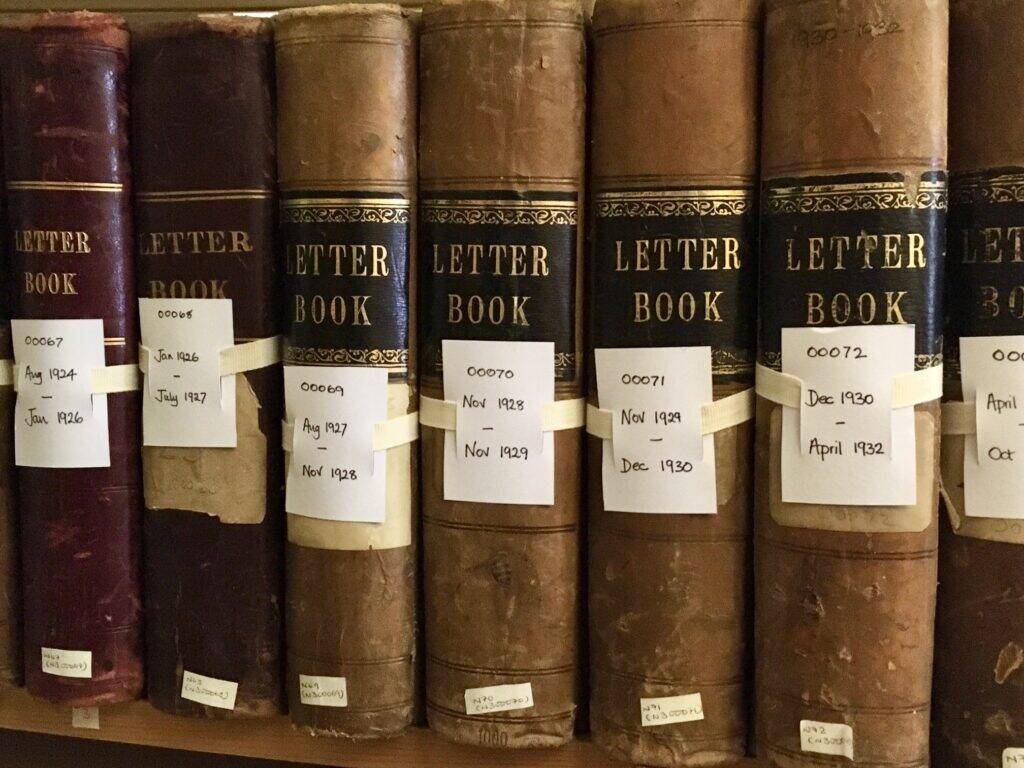
The Knebworth House Archive is a private, family archive that welcomes enquiries from researchers.
Contents:
There is no publicly available catalogue of our collection.
The archive is open for enquiries on Tuesdays, Wednesdays and Thursdays between 10am to 4pm. Visits are strictly by appointment only.
Email the Archivist Jill Campbell – jcampbell@knebworthhouse.com or by post – The Archivist, Knebworth House, Estate Office, Knebworth, Hertfordshire, SG3 6PY.